The quick answer
- What it does: a humidifier adds moisture to dry indoor air, raising the relative humidity of a room.
- Main benefits: many people find it eases dry skin and eczema flare-ups, dry eyes, a dry nose, throat and sinuses, and helps them breathe and sleep more comfortably. It also cuts static, and is kinder to houseplants and wood furniture.
- Who it helps: it can help some asthma and allergy sufferers, families with babies, and anyone in a dry, centrally heated home.
- Target: the ideal humidity is about 40–50%, for a healthier and more comfortable home. Don’t overdo it: much above 50–60%, dust mites and mold thrive.
- Check first: a $10–$15 hygrometer tells you whether your air is too dry or too damp.
- Humidifier or dehumidifier?

1What does a humidifier do?
Low room humidity can make many conditions feel worse, such as asthma, eczema, allergies and dry skin. Raising it to the right level could be the simple solution you’ve been looking for.
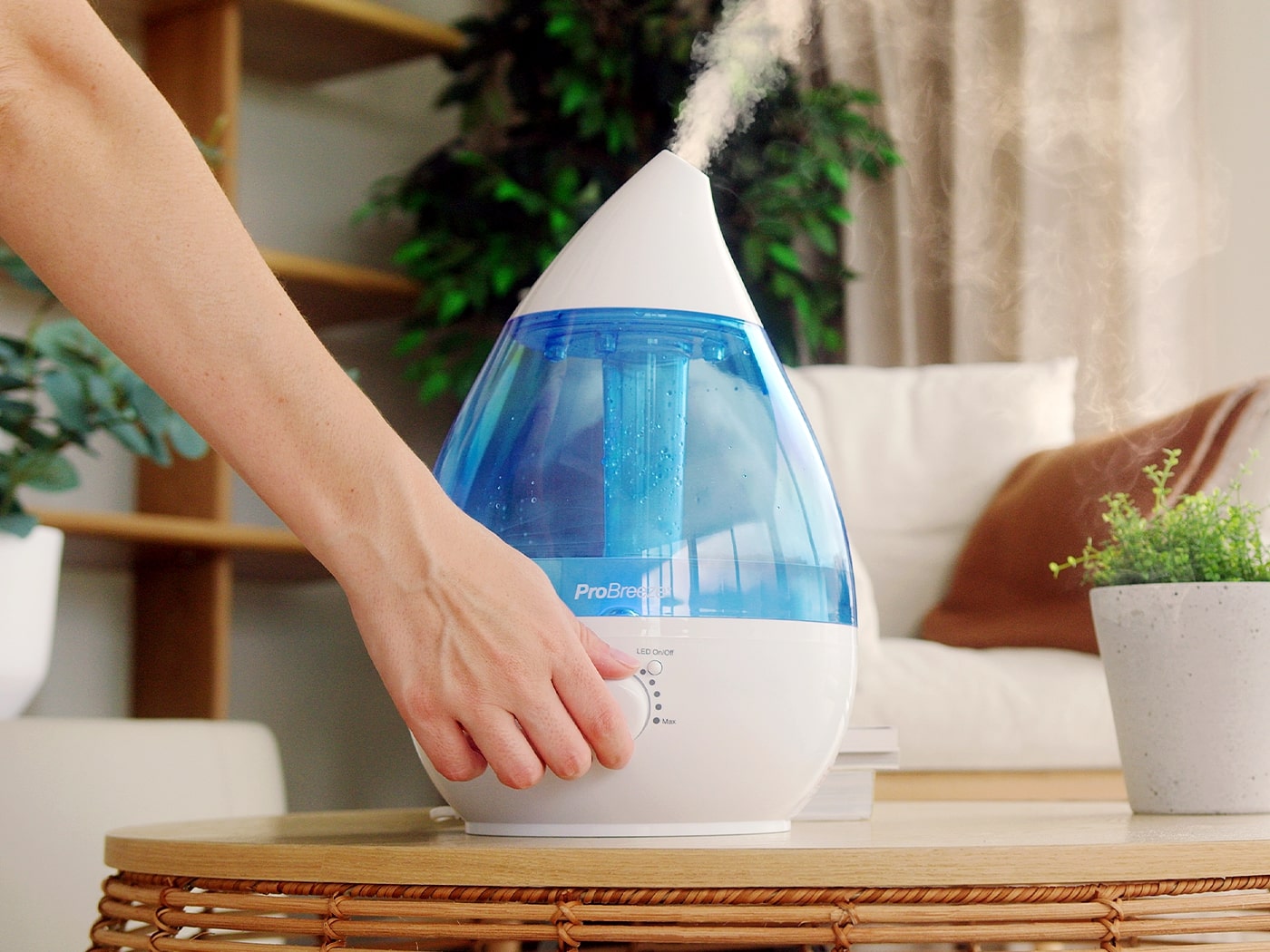
A humidifier turns water from its tank into a fine mist or vapour and releases it into the room, raising the relative humidity: how much moisture the air holds compared with the most it could hold at that temperature.
Air gets dry when cold outdoor air, which holds little moisture, is brought indoors and heated. That’s why dry-air problems are most common in winter, in rooms with the heating on for long periods, and in air-conditioned offices. A humidifier restores that dry air to a comfortable level.
Some humidifiers also take a carbon or anti-bacterial filter in the water tank for extra hygiene, so the mist they release is cleaner.
2The benefits of a humidifier
When indoor air is dry, raising the humidity to a comfortable level can make a real difference. Here’s what people most often notice:
Dry skin and eczema
The extra moisture in the air helps keep skin moisturized, so less water evaporates from it. Many people with dry skin or eczema find it eases dryness, itching, flare-ups and cracked lips.
Asthma, bronchitis and COPD
Dry, dusty air is an irritant. Some people with asthma, chronic bronchitis or COPD find comfortably humid air makes breathing feel easier and less irritated.
Allergies and dust
Moist air helps dust and other irritants settle rather than float around. Many dust-allergy sufferers say they notice fewer symptoms in a humidified room, and there’s less dusting to do around the house.
Sinuses and airways
Humidified air soothes dry sinuses and airways, which many people with sinusitis or a blocked nose find comforting.
Dry nose and throat
Dry air can dry out the lining of the nose and throat. Comfortable humidity can ease that irritation and help prevent nosebleeds. Germs also find it harder to travel through moist air.
Dry, tired eyes
Especially noticeable in heated or air-conditioned rooms, and for contact lens wearers.
Better sleep
A bedroom that isn’t uncomfortably dry can mean easier breathing, less snoring and waking up without a dry mouth and throat.
Fewer static shocks
Dry air builds up static. Raising the humidity means fewer shocks from door handles, and less static in hair and clothes.
Happier plants and furniture
Houseplants love humid air, and wood furniture, floors and instruments are less likely to dry out and crack.
3Do you need a humidifier?
Signs your air may be too dry:
- Dry, itchy skin and chapped lips that are worse indoors
- Waking with a dry mouth or sore throat
- Frequent static shocks
- Dry, irritated eyes

These can have other causes, so measure before you buy. A digital hygrometer costs under $15. If readings are regularly below about 30%, a humidifier can help. If they’re above 60%, or you see condensation on windows, your problem is damp, not dryness.
4Types of humidifier
| Type | How it works | Good for | Watch out for |
|---|---|---|---|
| Ultrasonic (cool mist) | Vibrations turn water into a fine, cool mist | Bedrooms: quiet and low power | Tap-water minerals can leave “white dust” |
| Evaporative | A fan blows air through a wet wick or filter | Self-limiting: output falls as air gets moister | Fan noise; wick needs replacing |
| Steam (warm mist) | Boils water and releases steam | Releases few minerals | Burn risk; uses far more electricity |
Based on US Environmental Protection Agency guidance on home humidifiers.
We recommend an ultrasonic cool-mist humidifier for the best results: quiet, cheap to run and easy to control. Standard humidifiers can still have a really positive impact. Pick one sized for your room, with a humidistat so it stops once it reaches your target.
5How to use a humidifier
- Most humidifiers need no assembly; some ultrasonic models have a filter or diffuser to fit first.
- Fill the tank with filtered, distilled or demineralized water if you can: it cuts white dust and scale.
- Stand it on a flat, water-resistant surface, raised off the floor and away from walls, furniture and electrical appliances.
- Point the mist into open space, not at bedding or curtains.
- Set a target of 40–50%, or use the humidistat, and check with a hygrometer.
- Plug in, switch on and it will work quietly away in the background.
- If condensation appears on windows, turn it down or off.

6Cleaning and safety
For the best results, clean your humidifier regularly: standing water can grow bacteria and mold. Follow the manual, and the US Environmental Protection Agency’s advice:
Every day
- Unplug, empty and wipe the tank dry
- Refill with fresh water
Every third day
- Scrub the tank to remove scale and film
- Rinse thoroughly after any cleaner
Before storing
- Clean and dry every part
- Replace filters or wicks as the manual says
Humidifiers for babies and nurseries
Cool-mist humidifiers are a popular choice for nurseries. Many parents find one helps ease a baby’s cough and blocked nose, and helps them sleep more comfortably. If your baby has a cough, always seek medical advice as well as using a humidifier.
In the meantime, happy humidifying!
7Humidifier or dehumidifier?
They do opposite jobs, so the right one depends on your humidity reading.
You need a humidifier
- Dry skin, lips and eyes
- Static shocks
- Dry throat on waking
You need a dehumidifier
- Condensation on windows
- Black mold or a musty smell
- Washing that takes ages to dry
In many North American homes, the problem changes with the seasons: cold winter heating drives indoor humidity below 30%, causing dry skin and sinuses, while humid summers and damp basements push humidity above 60%. If dampness or high moisture is your primary concern, explore our dehumidifiers collection and read our 13-step guide to buying a dehumidifier.
8Pro Breeze humidifiers
For comfortable, healthy indoor moisture, our top pick is the 1 Gallon Ultrasonic Cool Mist Humidifier. It delivers quiet cool mist and is rated for up to 40 hours per fill. Actual refill intervals depend on the mist setting.
- 1 Gallon (3.8L) Water Tank: holds enough water for longer intervals between refills
- Whisper-Quiet Ultrasonic Technology: operates silently, making it ideal for bedrooms and nurseries
- Aroma Diffuser Tray: add your favorite essential oils for aromatherapy while humidifying
- Ceramic Filtration: replaceable ceramic filters soften water and minimize mineral dust
- Integrated Night Light & Auto Shut-Off: automatically powers off when the water tank empties for peace of mind
Explore our complete humidifiers collection to keep your indoor air balanced and comfortable year-round. All North American Pro Breeze products include a 1-year limited warranty, extended to 2 years with product registration within 7 days of purchase.
9Frequently asked questions
What should I look for in a bedroom humidifier?
Adding moisture to dry bedroom air can ease a dry nose or throat. A quiet cool-mist model with a humidistat helps control the moisture level. Keep it a little away from the bed, clean it daily and follow the instructions in your product’s manual.
Does a humidifier help with eczema and dry skin?
Many people find it does. Dry air pulls moisture from your skin, so keeping the room at 40–50% humidity helps skin stay moisturized and can ease eczema flare-ups, especially in winter. Use it alongside your usual skincare.
Is a humidifier good for asthma and allergies?
It can help some asthma and allergy sufferers breathe more comfortably when the air is dry. Keep humidity at 40–50%, not higher, and clean the tank often, because damp air and a dirty tank encourage dust mites and mold.
Are humidifiers good for babies?
Cool-mist humidifiers are popular in nurseries and many parents find they help a baby with a cough or blocked nose sleep more comfortably. Place it out of reach, clean it daily and seek medical advice for any cough in a baby.
Can a humidifier help with a cold, cough or sinus problems?
Moist air soothes a dry, irritated nose, throat and sinuses, which many people find makes a cold or sinusitis more bearable. It won’t cure a cold; see a doctor for a cough that persists.
Does a humidifier reduce dust and static?
Moist air helps dust settle and stops static building up, so many people notice less dust in the air and fewer static shocks.
Should I use tap water in a humidifier?
Distilled or demineralized water is best, especially in an ultrasonic model. Tap water works, but in hard-water areas it can leave white dust on surfaces and scale inside the tank.
Where should I put a humidifier?
In the room where you spend the most time, often the bedroom, on a raised, water-resistant surface, away from walls, furniture and electronics.
Can a humidifier cause mold?
Yes, if you run it too high. Keep humidity below about 50–60% and watch for condensation on windows.