The quick answer
- What an air purifier does: it pulls room air through specialized filters to trap airborne particles—dust, pollen, pet dander, smoke, and mold spores—before circulating clean air back into the room.
- Who notices the difference: people with allergies, asthma, pets, or homes near busy roads, and anyone who wants less airborne dust and fresher-feeling bedroom air.
- The filter that matters: look for a True HEPA filter (such as HEPA 13), which captures at least 99.97% of particles down to 0.3 microns. An activated carbon layer handles household odors, pet smells, and smoke.
- What it doesn’t do: an air purifier does not lower humidity or stop window condensation; for excess moisture, you need a dehumidifier.

Indoor air is often significantly more polluted than outdoor air: dust mites, pet dander, pollen carried inside on clothing, cooking fumes, and fireplace or wildfire smoke all accumulate in enclosed rooms. A quality air purifier quietly and continuously removes these airborne particles. Here is how they work, the tangible benefits you will notice, and how to choose the right one for your home.
1How an air purifier works
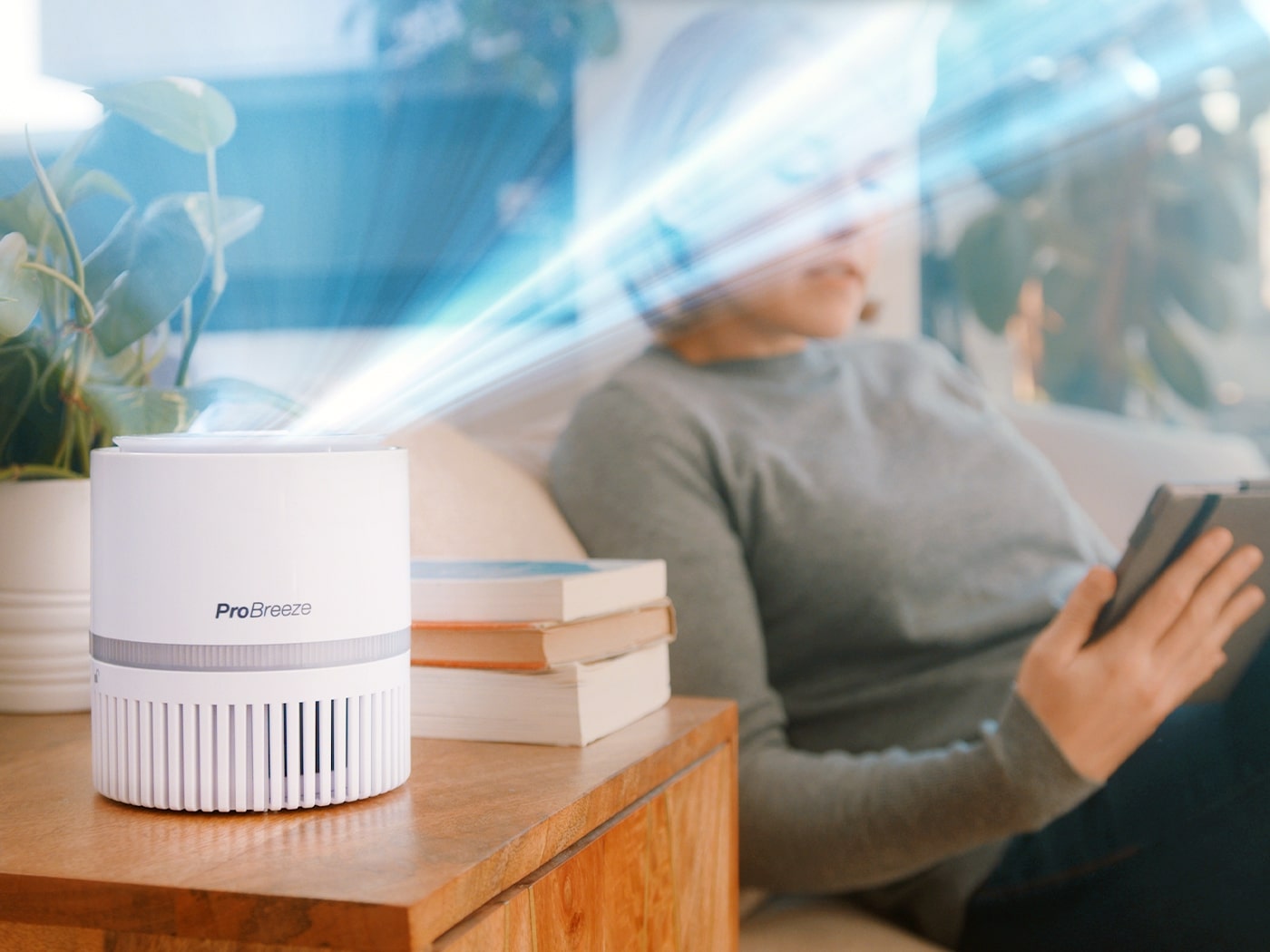
The concept is simple but highly effective: an internal fan draws indoor air into the unit, forcing it through a multi-stage filtration system before exhausting sanitized, clean air back into the room.
Pre-filter
Catches large visible particles: pet hair, lint, and large dust clumps, extending the lifespan of finer interior filters.
True HEPA filter
Dense fibrous mesh that captures microscopic particles down to 0.3 microns, including pollen, fine dust, mold spores, and dander.
Activated carbon
Porous carbon granules that absorb volatile organic compounds (VOCs), cooking odors, tobacco smoke, and pet smells.
2The benefits of an air purifier at a glance
Noticeably less dust
Captures circulating dust particles before they settle on dressers, nightstands, and floors, cutting down on dusting chores.
Relief from pollen & seasonal allergies
Traps tree, grass, and weed pollen brought indoors, providing immediate relief from itchy eyes and sneezing during allergy seasons.
Captures pet hair & dander
Removes microscopic skin flakes (dander) and floating fur shed by dogs and cats, making homes friendlier for sensitive guests.
Neutralizes smoke & cooking odors
Activated carbon adsorbs persistent odors from seared food, burnt oil, cigarette smoke, or seasonal outdoor wildfire haze.
Filters airborne mold spores
True HEPA filters capture microscopic mold spores drifting through the air, preventing them from spreading between rooms.
Fresher, calmer bedrooms
Filtering airborne allergens can make a bedroom feel more comfortable for people with allergies or asthma.
3Who benefits most?
- Allergy & asthma sufferers: Dramatically cuts the concentration of airborne triggers like pollen, dust mite feces, and spores.
- Pet owners: Traps shedding fur and airborne dander from cats, dogs, and small animals.
- City & apartment dwellers: Filters vehicle exhaust fumes and fine particulate matter (PM2.5) entering through open windows.
- Families with infants or elderly members: Protects vulnerable developing lungs and sensitive respiratory systems.
4Creating a calmer bedroom: 3 steps
- Minimize fabric dust traps. Wash bedding weekly in hot water (above 130°F / 54°C) to kill dust mites, and consider allergen-barrier mattress encasements.
- Control humidity and temperature. Dust mites thrive in warm, humid rooms. Maintain indoor relative humidity below 50% (30% to 50% is ideal). In warm bedrooms, a portable air conditioner lowers the temperature as it circulates air through its filter.
- Choose quiet filtration. A True HEPA filter captures fine airborne particles, and low fan speeds or sleep mode reduce noise in a bedroom.

Our 5-in-1 Air Purifier features a multi-stage filtration system with True HEPA and an ultra-quiet sleep mode designed specifically for bedrooms. For larger master suites or open-plan homes, our Large Air Purifier covers spaces up to 2,000 sq ft with smart app integration.
5Improving indoor air quality at home
An air purifier is most effective when paired with smart indoor air habits:
- Ventilate when outdoor air is clean: Open windows on low-pollen, crisp days for natural air turnover; keep windows firmly shut on high-pollen or high-smog days.
- Vacuum with a sealed HEPA vacuum: Standard vacuums can blow fine dust back into room air. Use a vacuum with sealed HEPA filtration.
- Avoid artificial aerosols: Heavy chemical air fresheners, aerosol sprays, and scented candles release synthetic VOCs into the air.
- Groom pets outdoors or near an air purifier: Regular brushing reduces the volume of loose dander that enters carpeting and upholstered furniture.
6HEPA, carbon and the filters that matter
When comparing air purifiers, the filter technology determines performance:
- True HEPA (H13): Medical-grade standard capturing at least 99.97% of airborne particles down to 0.3 microns. Essential for pollen, mold spores, and pet allergens.
- Activated Carbon: Millions of microscopic pores chemically trap volatile odors, formaldehyde, and smoke particles that pass right through particle filters.
- Negative Ionizer: Available on select models, releasing negative ions that bind to airborne particles, causing them to group together and fall into the filter faster.
7Air purifier or dehumidifier?
These two appliances address completely different home comfort challenges, though many homes benefit from using both:
| Feature | Air purifier | Dehumidifier |
|---|---|---|
| Primary function | Filters solid and gaseous contaminants out of the air | Extracts excess water vapor from the air |
| Best for | Dust, seasonal pollen, pet dander, smoke, odors, airborne spores | Window condensation, musty odors, high basement dampness, drying laundry |
| Does not help with | Humidity, wet window condensation, mold growing on drywall | Airborne pollen, smoke, dust dander (beyond a simple mesh screen) |
If your main concern is wet windows, damp basement air, or mold forming on walls, your priority is lowering humidity. Read our guides to dehumidifiers for condensation and mold and buying a dehumidifier. For dust, pet dander, and respiratory allergy triggers, a dedicated HEPA air purifier is the right tool.
8Will an air purifier help with mold?
An air purifier equipped with a True HEPA filter effectively captures airborne mold spores floating through the room, preventing you from inhaling them and slowing their spread to other areas. However, an air purifier cannot eliminate mold growing on walls or fix damp structural materials. To stop mold permanently, you must combine physical cleaning with a dehumidifier that keeps humidity under 50%.
9Choosing one, and getting the best from it
Select an air purifier rated for the square footage of your space. A unit designed for a 200 sq ft room will struggle in an open-concept living area. Check Clean Air Delivery Rate (CADR) ratings to ensure adequate air changes per hour (ACH). For full details, see our 6-step guide to buying an air purifier.

50 Pint/Day Dehumidifier - 2,000 Sq Ft Dehumidifiers for Home with Continuous Drainage
$189.99
View detailsGetting the best from your air purifier
- Place in high-use areas: Keep the purifier in bedrooms or primary living areas with doors closed for maximum air turnover.
- Maintain 12 inches of clearance: Ensure air inlets and exhaust grilles remain unobstructed by drapes or furniture.
- Run continuously on low: Air quality degrades rapidly when purifiers are turned off. Continuous low-speed operation maintains steady air cleanliness.
- Replace filters on schedule: Replace True HEPA and carbon filters every 6 to 12 months depending on usage and air quality.

?Frequently asked questions
What are the benefits of an air purifier?
An air purifier removes dust, pollen, pet dander, smoke particles, and mold spores from indoor air, reducing allergy symptoms, eliminating stale odors, and keeping living spaces noticeably cleaner.
Does an air purifier really remove dust?
Yes. A True HEPA filter captures airborne fine dust particles, while an outer pre-filter traps larger dust clumps and hair. By capturing airborne dust, a purifier can help reduce how much of it settles on surfaces.
Does an air purifier remove moisture or help with condensation?
No. Air purifiers clean the air but do not alter humidity levels. To stop window condensation or treat damp basements, pair your air purifier with a dedicated Pro Breeze dehumidifier.
Can an air purifier help with allergies and asthma?
Yes, by significantly reducing airborne environmental triggers like pollen, dust mites, and pet dander. While not a medical cure, cleaner air provides substantial everyday symptom relief.
What makes an air purifier quiet and inexpensive to run?
Sleep mode lowers fan noise. Power draw of 20–45 W costs less than 1¢ an hour at 18.16¢ per kWh. Follow the instructions in your product’s manual.
Clean, crisp air makes every room healthier and more inviting. Explore our full collection of Pro Breeze air purifiers to find the right model for your home, or consult our air purifier buying guide.