


The quick answer
- Why rooms smell musty: everyday moisture from showers, cooking, breathing and wet laundry lingers in fabrics and walls, creating stale odors.
- How a dehumidifier fixes it: by extracting excess moisture directly from the air, fabrics dry faster and the damp environment that feeds odor-causing microbes is eliminated.
- No masking scents: unlike air fresheners that merely cover up odors with synthetic perfume, a dehumidifier eliminates the root cause.
- Where it helps most: below-grade basements, bedroom walk-in closets, bathrooms without windows, and laundry areas.
- See how to use a dehumidifier for odor control.

Shop dehumidifiers for fresh indoor air
There is a particular kind of household odor that is difficult to describe, but immediately recognizable: a slightly damp, stale, earthy scent in a bedroom closet; towels that take all day to dry and retain a sour note; or a basement den that never quite smells clean no matter how often you vacuum. The root cause is straightforward: most persistent household odors are directly driven by excess airborne moisture.
A dehumidifier does not perfume your home with chemical fragrances. Instead, it extracts the excess humidity that allows odors to linger. By lowering airborne moisture, a dehumidifier makes your entire living space feel lighter, cleaner, and naturally fresher.
1Why musty smells happen in the first place
Musty odors are rarely random. They are a clear biological sign that moisture has lingered in an enclosed area long enough for bacteria and microscopic mold spores to flourish.
This happens when:
- Humid, warm air accumulates in a room with limited air exchange or ventilation
- Fabrics remain damp for extended periods (bath towels, indoor laundry, bath rugs, curtains)
- Hidden surfaces stay cool and damp (behind heavy furniture, along exterior basement walls, inside closed closets)
Once moisture settles into soft fabrics and porous building materials, microbial volatile organic compounds (mVOCs) are produced. That produces the classic “damp basement” smell—even in a thoroughly cleaned room.
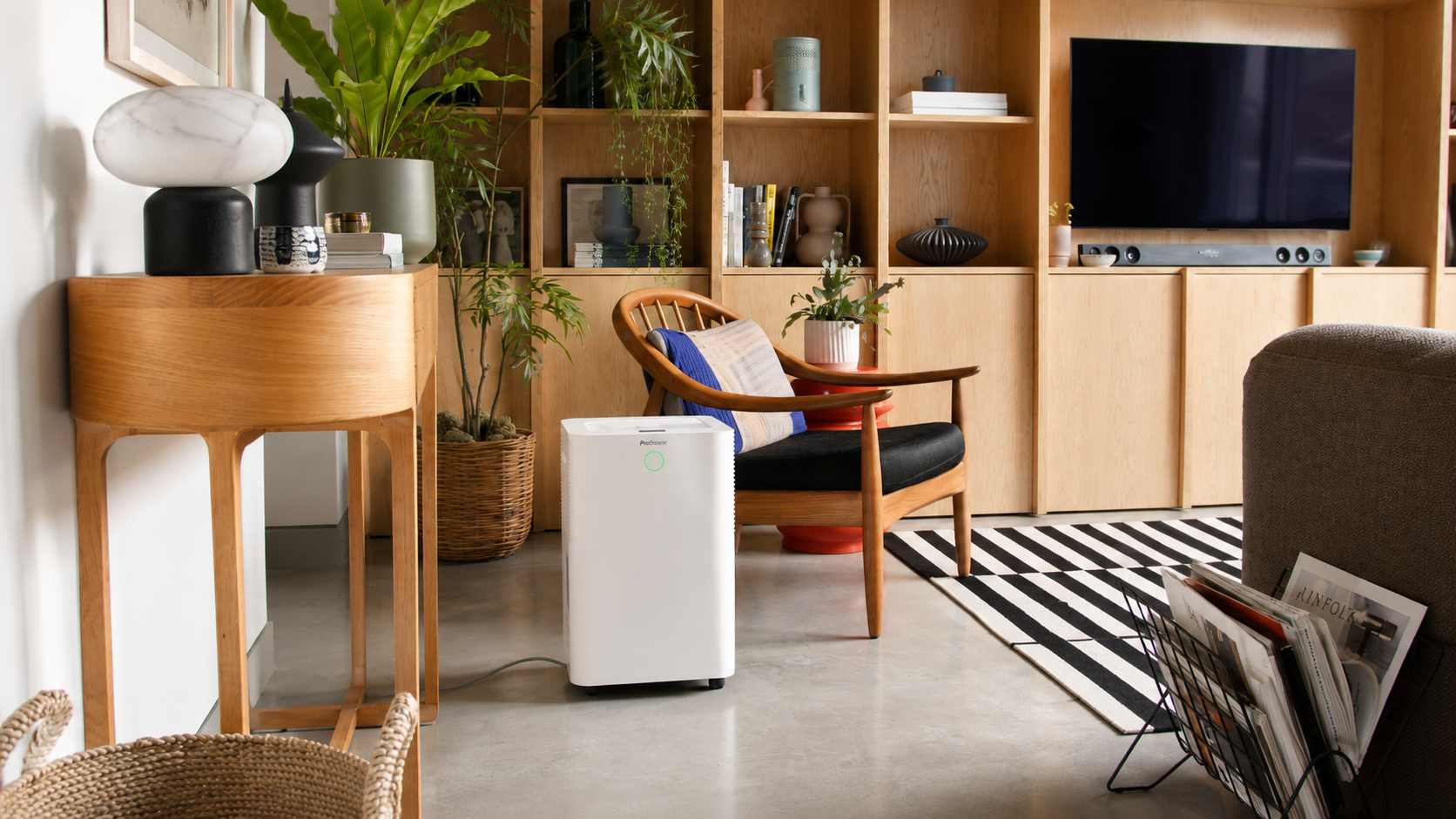
2Common places odors show up (and what they mean)
If any of these trouble spots feel familiar, elevated humidity is almost certainly the culprit:
Closets & dresser drawers
Trapped air + dense clothing fabrics + cooler wall temperatures create pockets where stale air settles into garments.
Bedrooms
Overnight respiration from sleepers combined with shut windows and closed doors drives morning stuffiness.
Bathrooms
Shower steam lingering for hours on tile grout, shower curtains, and damp bath towels.
Laundry rooms & basements
Indoor drying racks and below-grade concrete foundations naturally attract and hold damp air.
Notice the pattern: if odors worsen after heavy rain, during humid summer weather, or in rooms that lack cross-ventilation, humidity is the driving factor.
3How a dehumidifier reduces odors without masking them
A dehumidifier draws humid air into the unit, passes it over chilled condensation coils, drains the water away, and circulates warm, dry air back into the room. This stops odors at the source.
- It ensures fabrics dry thoroughly: when bath towels, workout gear and laundry dry rapidly, odor-causing bacteria cannot establish themselves.
- It eliminates the “heavy air” feeling: humid air traps odor molecules and feels muggy. Dry air feels crisp, light, and clean.
- It breaks the re-contamination cycle: removing moisture prevents clean closet clothes from picking up a stale odor days after washing.
- Natural, chemical-free freshness: unlike aerosol sprays or scented candles that coat your lungs with artificial perfumes, a dehumidifier genuinely removes the physical cause of the smell.
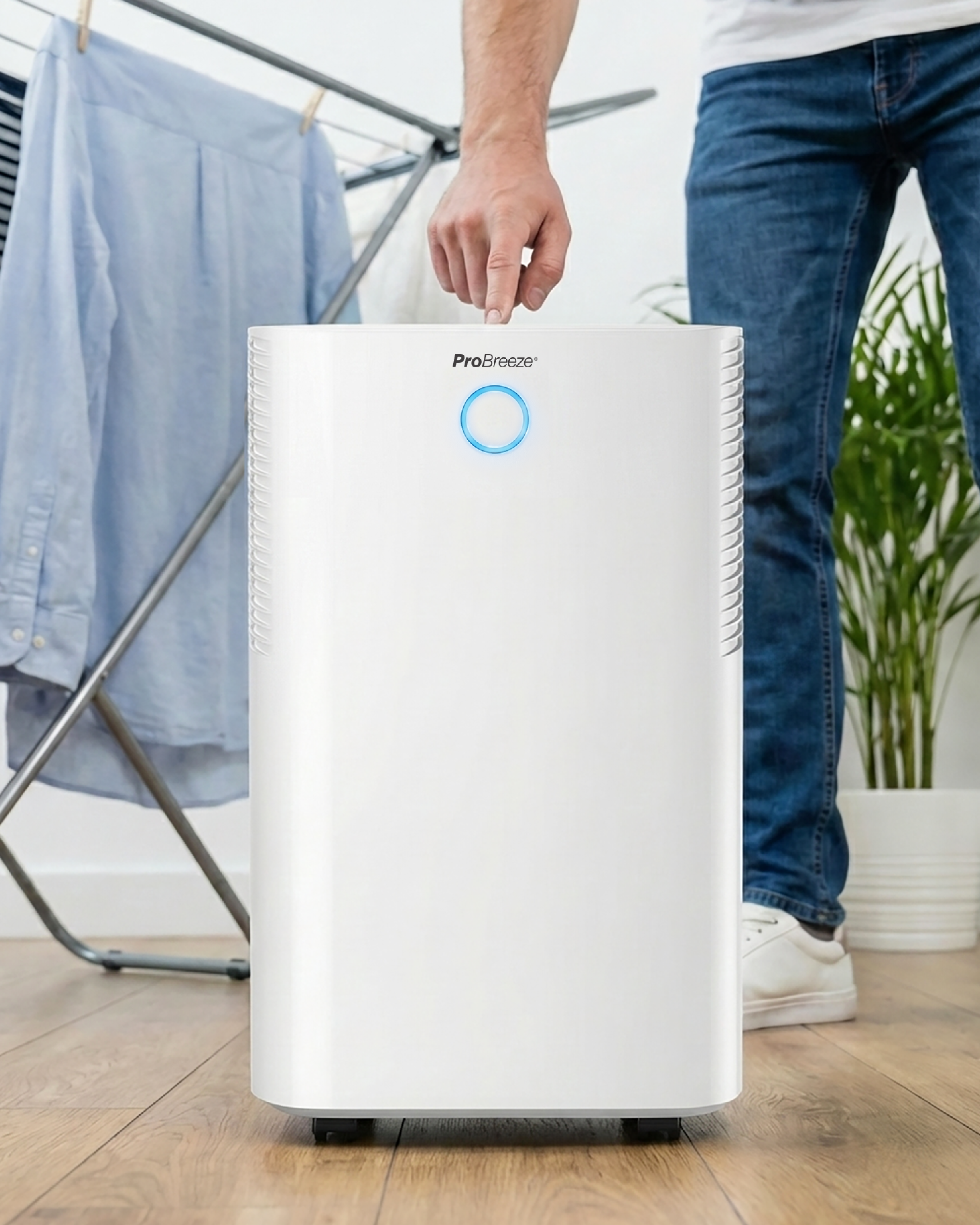
4A simple everyday freshness upgrade
You do not need an active flood or visible mold problem to experience the benefits. For many households, a dehumidifier is simply a quality-of-life upgrade that keeps home air feeling like it was just aired out.
If you love that crisp “freshly aired” feeling but live in a climate where opening windows lets in humid summer heat, outdoor pollen, or winter freezes, running a dehumidifier quietly in the background provides the same crisp indoor freshness automatically.
5Subtle signs moisture is behind the smell
Moisture buildup is often subtle before it becomes severe. Watch for these daily indicators:
- A musty odor that feels strongest when you wake up in the morning
- Closets that smell stale even though every garment was freshly laundered
- Bath towels that smell sour after only one or two uses
- Bathrooms where mirrors remain fogged up long after a shower
- A living room or den that feels stuffy and heavy despite being clean and tidy
If you notice one or two of these signs, setting a dehumidifier to 45%–50% relative humidity will resolve the problem quickly.
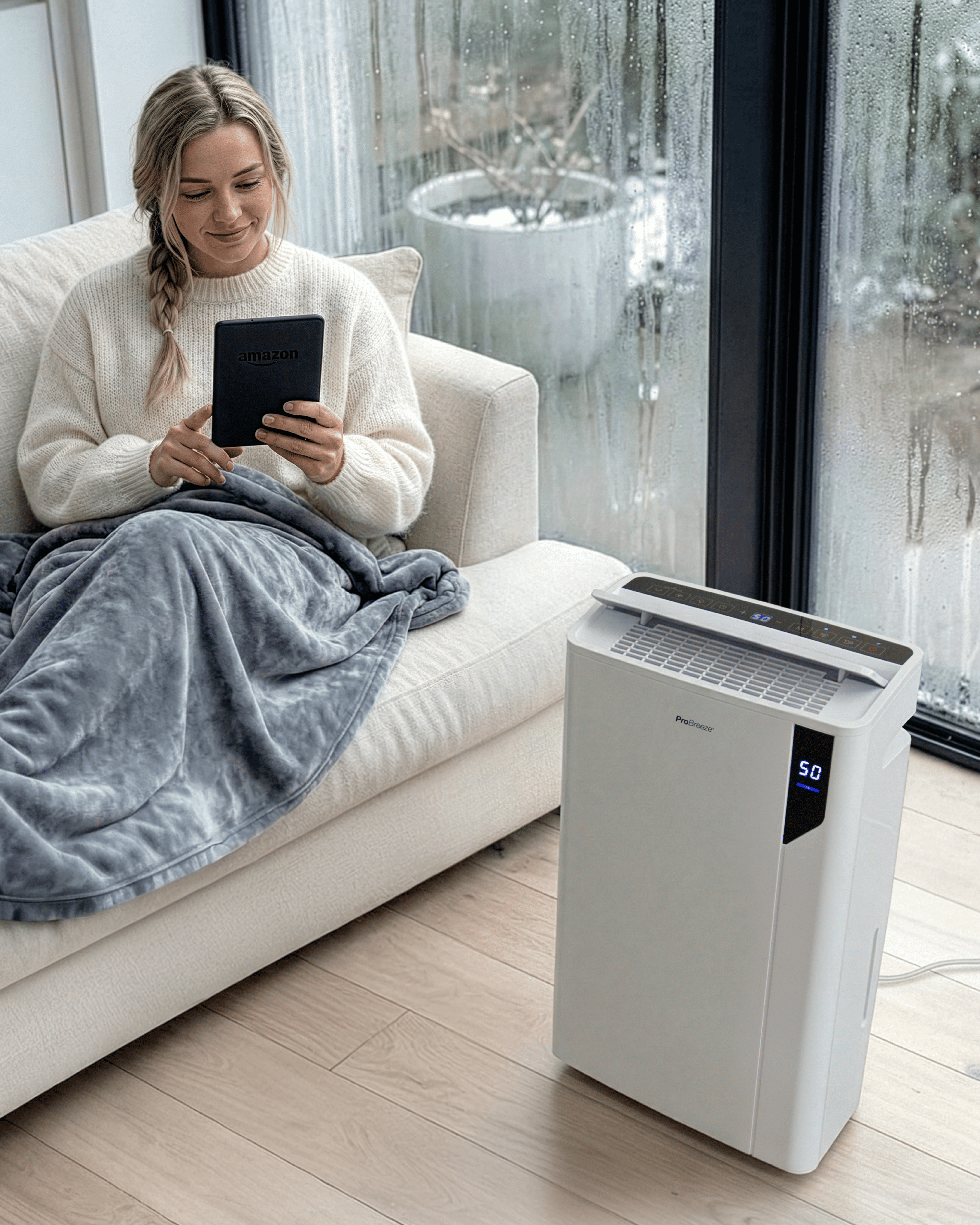
6Simple freshness routines that work
Keep moisture control simple and stress-free by establishing basic operating habits around your home:
- Post-shower routine: run a compact dehumidifier in or near the bathroom for 30–60 minutes after showering to rapidly drop humidity levels.
- Laundry days: place your dehumidifier near the indoor clothes drying rack with airflow directed across the garments.
- Freshening closets: position the dehumidifier in the bedroom or dressing area and leave closet doors slightly ajar to let air circulate freely.
- Basement maintenance: in finished or unfinished basements, set your compressor dehumidifier to auto humidistat mode (45%–50% RH) and connect a gravity drain hose for continuous, hands-free protection.
7Recommended Pro Breeze picks
For basements, large rec rooms and whole-floor moisture control, our 50 Pint/Day Dehumidifier with Continuous Drainage pulls up to 50 pints of moisture daily. For bedrooms, dressing areas and bathrooms, our electric mini dehumidifiers deliver whisper-quiet daily freshness.

For sealed walk-in closets, pantries and enclosed storage lockers, the non-electric Osmo® 2.3 pt Moisture Absorber provides silent, passive odor prevention.
8Frequently asked questions
Will a dehumidifier remove all household smells?
A dehumidifier excels at eliminating damp, musty, and mildew-related odors caused by excess humidity. For strong point-source odors like cooking grease, pet accidents or cigarette smoke, an air purifier with an activated carbon filter alongside regular cleaning is recommended.
Is a dehumidifier better than air fresheners or sprays?
Yes. Air fresheners merely mask odors temporarily with synthetic fragrances, doing nothing to stop the bacteria and mold growing in damp fabrics. A dehumidifier tackles the environmental root cause by removing the water vapor that allows odors to form.
Where should I place the dehumidifier to stop odors?
Place it in the space where odors are most concentrated: unfinished basements, laundry rooms, primary bedrooms, or outside walk-in closet doors.
A dehumidifier removes excess moisture from the air, delivering faster fabric drying, lighter-feeling living areas, and a home that stays naturally fresh with minimal effort. Explore our complete dehumidifiers collection to discover the right capacity for your space.


