
The quick answer
- What are the best energy-saving devices for your home? The best devices heat you or your immediate space instead of the entire house: personal heated throws (about 2¢ an hour), electric blankets, a ceramic space heater for one room, an air fryer for quick meals, and a dehumidifier that dries laundry for around 30¢ a session. Calculations use the U.S. average of 18.16¢/kWh.
- Cheapest to run: personal electric throws cost about 2¢ an hour, while a 1500W space heater costs about 27¢ an hour at full power before its thermostat cycles off. See every cost.
- Winter damp: a dehumidifier dries laundry for pennies while keeping condensation and mold down. See how.
- Want a heater? Our portable heater guide compares the types.

Energy bills are still a worry every winter. You cannot change the price, but you can change how much you use. By making your home more energy efficient you can save on your utility bills while benefiting the environment by lowering your carbon footprint. These simple changes can be made in every household and will form money-saving habits that benefit you in the long run. It may surprise you how energy-hungry some household devices are, so here are five that could help you save on energy costs.
1Running costs at a glance
These devices can reduce energy consumption when they replace a larger appliance or let you heat only the person or room currently in use. Costs are calculated using the U.S. residential average electricity price of 18.16¢ per kWh (U.S. EIA Electric Power Monthly table 5.6.A, August 2026).
| Device | Rated power | Cost per hour | What it does |
|---|---|---|---|
| Electric heated throw | 100–120 W | 1.8¢–2.2¢ | Heats the person directly, not the room |
| 1500W Ceramic space heater | 1,500 W | 27.2¢ at full power | Warms one occupied room; thermostat cycles |
| 12-Quart Air fryer oven | 1,800 W | 32.7¢ | Cooks meals in less time than a full oven |
| 50 Pint/Day dehumidifier | 420 W | 7.6¢ | Dries laundry and protects basement/living spaces |
| 52 Ounce Mini dehumidifier | 40 W | 0.7¢ | Moisture control for closets and small rooms |
Costs reflect rated wattage at 18.16¢/kWh. Rates vary by state and province. Thermostat-controlled heaters cycle off once the set temperature is reached, so average hourly costs are lower.
2Heated throws
Gas and electricity prices make it costly to heat every room, so we advise heating yourself instead. This is in line with advice from MoneySavingExpert, whose article Heat the human, not the home says exactly that. A heated throw can cost significantly less to run than heating a room with central heating or an electric heater.
Personal heating efficiency
An electric heated throw is one of the most affordable and efficient ways to stay warm. It warms up rapidly and costs only about 2¢ an hour to run (1.8¢–2.2¢ at 100–120 W). With adjustable heat settings, soft fleece fabric, and built-in timers, heated throws provide targeted comfort while allowing you to turn down the central thermostat across the rest of the house.
3Portable space heaters
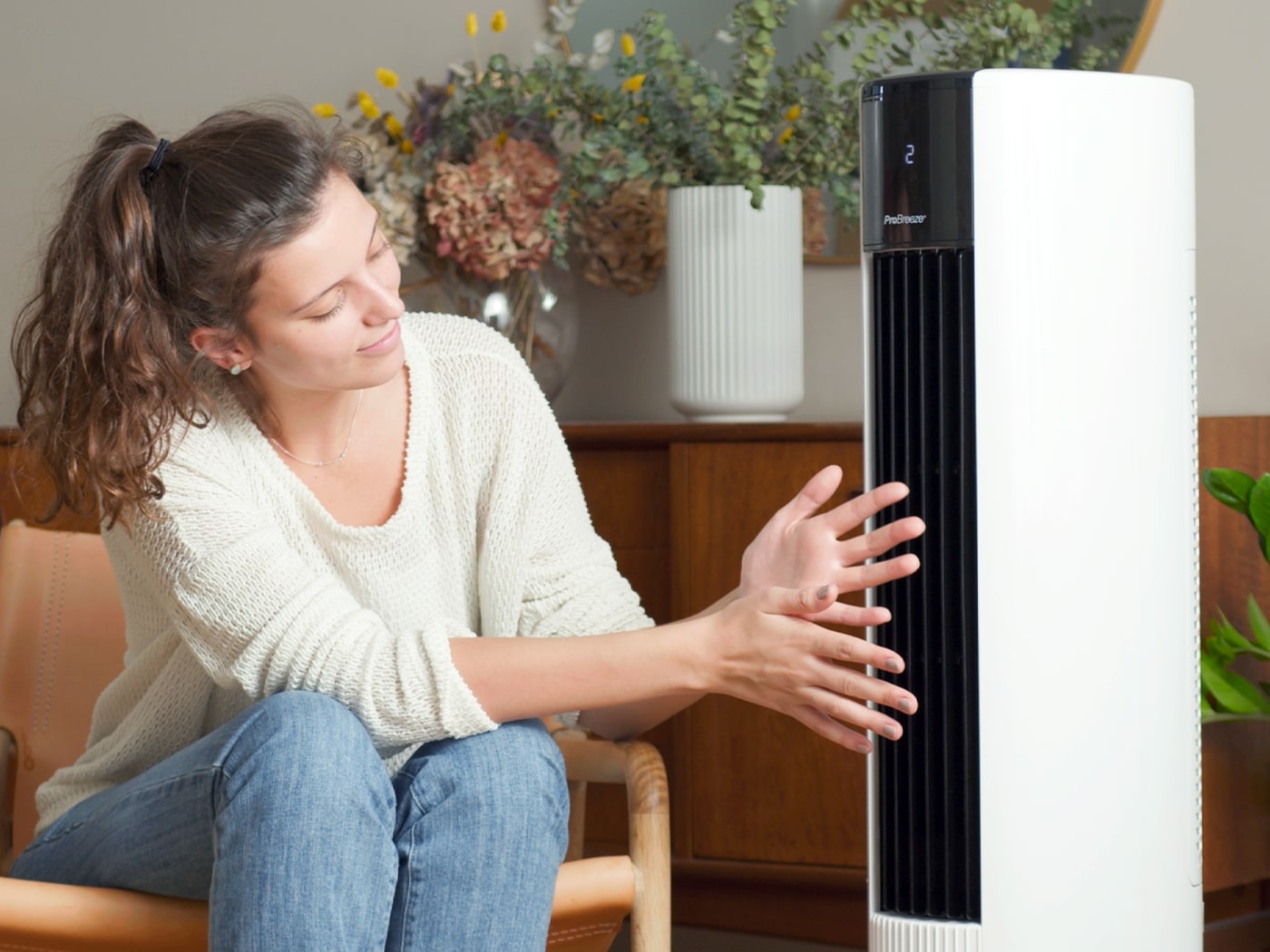
A portable space heater heats an occupied room quickly and effectively, allowing you to lower the central thermostat for the rest of your home. In North American homes, electric space heaters operate on 120V household circuits at up to 1500W, making ceramic space heaters the top choice for fast, reliable, energy-efficient supplemental warmth.
Our recommendation: Pro Breeze 1500W Mini Oscillating Ceramic Space Heater
This compact ceramic heater features advanced ceramic heating elements, 70° oscillation to distribute warmth evenly, 3 operating modes, and an adjustable thermostat. At full 1500W power, it costs about 27.2¢ an hour to run, but its built-in thermostat cycles off once your desired temperature is reached, lowering real hourly costs.
Explore our complete heaters collection, or read our portable electric heater guide to compare models.
4Electric blankets
An electric blanket warms the bed directly and can cost as little as about 2¢ an hour. It provides warmth where you need it, and models with a timer switch off after the selected interval. Follow the instructions in your product’s manual.
5Air fryers
Air fryers have become one of the most popular kitchen appliances. They are not only great for a busy lifestyle, as they can cook food in a fraction of the time of a conventional oven, but also perfect for lowering your energy costs. An air fryer heats a much smaller space, so for everyday meals it can cost less than half as much as running a full-size oven. A 2022 UK cooking-cost study found an air fryer cost less than half as much a year to run as a gas cooker, using 20 minutes a day for the air fryer and 43 minutes for the cooker. These are historical estimates, not today’s running costs. They also use up to 80% less oil than conventional cooking methods.
Our top kitchen recommendation is the 12 Quarts Large Air Fryer Oven, which offers 12 pre-set cooking modes to roast, bake, and crisp meals in a fraction of oven cooking times. At 1800W, it costs about 32.7¢ an hour at full power—and since most dishes cook in 15 to 25 minutes, cooking a family meal typically costs under 15¢.
6Dehumidifiers
Cold seasons create multiple problems for a homeowner. Not only does drying laundry become costly with a clothes dryer or the central heating on, but the cold also creates the right conditions for condensation and mold to grow, because there is less ventilation and more condensation from the difference between indoor and outdoor temperatures. Mold can damage your home and lead to further costs, so a dehumidifier is an invaluable tool: it helps reduce the risk of damp and dries laundry cheaply and efficiently.
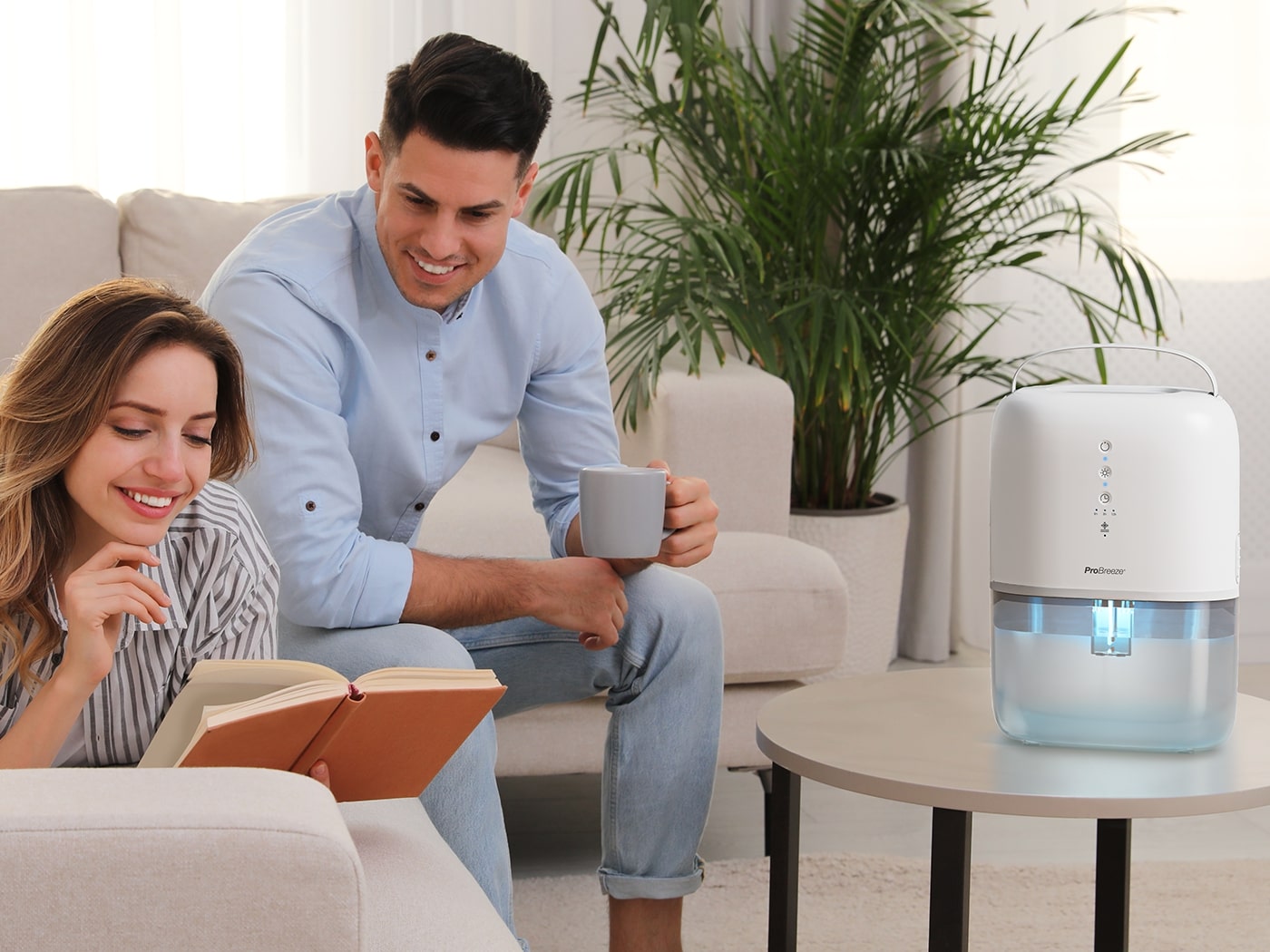
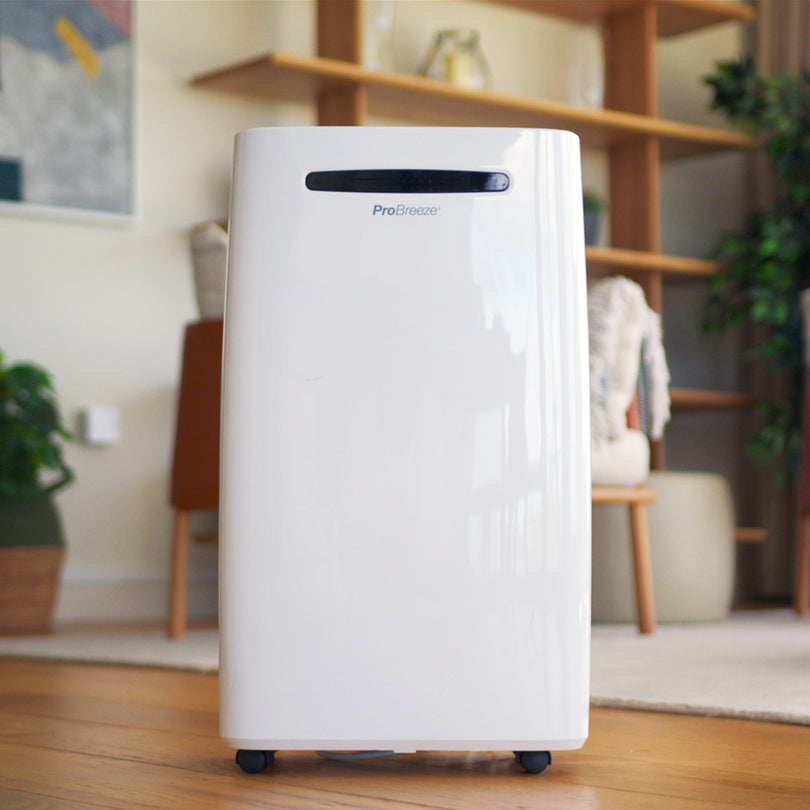
Our 50 Pint/Day dehumidifier draws 420W, costing approximately 7.6¢ an hour to run. A four-hour laundry session costs roughly 30¢, compared to 45¢–55¢ per cycle for a standard electric clothes dryer—all while protecting clothes and pulling excess humidity out of the air.
Our recommendation: Pro Breeze 50 Pint/Day Dehumidifier
This powerful dehumidifier extracts up to 50 pints of moisture per day with continuous drainage capability, electronic controls, and coverage up to 2,000 sq ft. It helps prevent dampness, condensation, and mold in basements and laundry rooms while drying clothes gently and affordably.
Read how to dry clothes indoors with a dehumidifier, our guide to a dehumidifier for condensation and mold, or the cost of every model in how much a dehumidifier costs to run.
7Recommended Pro Breeze picks
Browse the dehumidifiers and space heaters ranges for more options.
8Frequently asked questions
What are the best energy-saving devices for the home?
The best energy-saving devices heat you or your laundry instead of the whole house: a heated throw, an electric blanket, a portable heater for one room, an air fryer for small meals and a dehumidifier for drying laundry. Together they can take pressure off your central heating and clothes dryer.
How much does a space heater cost to run per hour?
A 1500W ceramic space heater costs about 27.2¢ an hour at full power using the U.S. average electricity rate (18.16¢/kWh). Because its thermostat switches the element off once the room reaches the set temperature, real hourly costs are typically much lower.
How much does it cost to run a heated throw?
About 2¢ an hour: at 100–120 W it costs roughly 1.8¢–2.2¢ an hour, so an 8-hour overnight run costs under 18¢.
Is a dehumidifier cheaper to run than a clothes dryer?
Usually, yes. A four-hour drying session with our 50 Pint dehumidifier costs about 30¢, compared to 45¢–55¢ per load for a conventional electric clothes dryer. The dehumidifier also dries the room.
Can a dehumidifier save money on heating?
A dehumidifier is not a heater, so it will not cut your heating bill directly. It does dry laundry for pennies instead of using a clothes dryer, and drier rooms feel more comfortable. It also helps stop the condensation that comes with drying clothes indoors.
Is an air fryer cheaper than an oven?
For small meals, usually. An air fryer heats a much smaller space and cooks in less time. For big batches or roasts, a full oven can still be the better choice.
The simplest way to cut your energy use this winter is to take control of it: heat yourself, dry your laundry for pennies and keep your home free of damp. For more tips on the right appliances for your home, follow us on Instagram and TikTok.