

The quick answer
- Stuffy bedroom: a quiet oscillating tower fan or desk fan with a sleep timer. See how to choose.
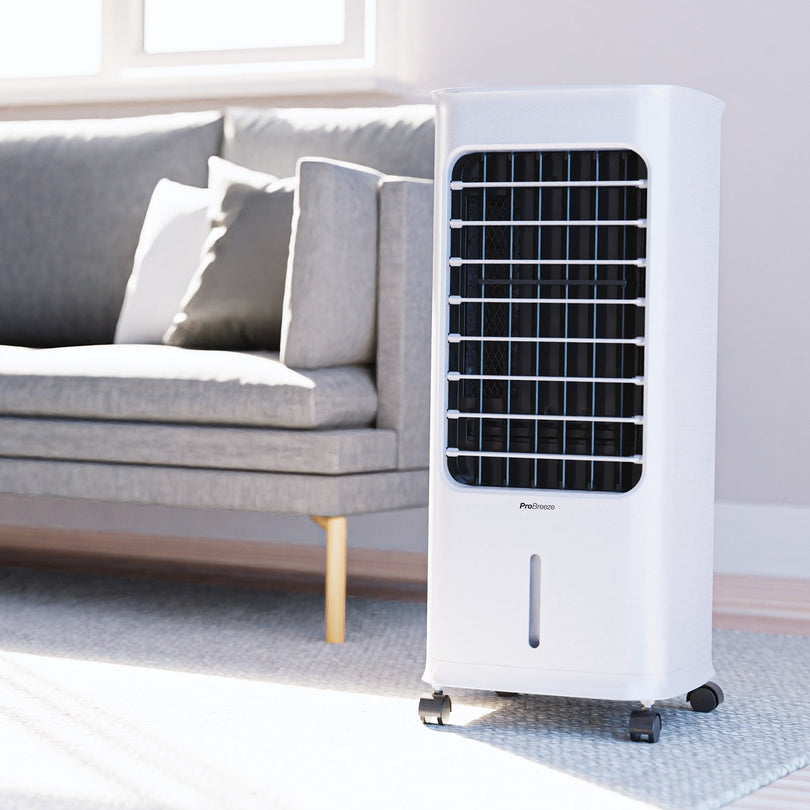
- Warm, dry night (no venting hose): an evaporative air cooler chills the breeze with water evaporation, requiring zero window kits.
- Properly hot room: a 10,000 BTU smart portable air conditioner actively refrigerates air and drops bedroom temperature.
- Overnight running cost: about 5¢ to 7¢ for a fan, 9¢ for an air cooler, and roughly $1.45 for an air conditioner (8 hours at full cooling).
- See our top picks.

Cooling a bedroom requires a different approach than cooling a daytime living room. You do not need a freezing icebox: you need a calm, quiet, comfortable environment that helps your core body temperature drop so you can fall asleep and stay asleep. This guide helps you choose the right Pro Breeze appliance for hot nights, with clear recommendations based on your room’s temperature and noise requirements.
1How hot does your bedroom get?
For a mildly stuffy bedroom, a quiet tower fan is the most economical answer. For warm nights in dry climates, an evaporative cooler chills airflow without window kits. For bedrooms that stay intensely hot, a portable air conditioner is the only option that physically lowers the room temperature.
| Your bedroom environment | Best fit | Why it works |
|---|---|---|
| Stuffy or stale, but not scorching | Tower or desk fan Lowest cost | Gentle, whisper-quiet airflow accelerates evaporative skin cooling for pennies a night. |
| Warm, dry and uncomfortable | 3-in-1 Air cooler No hose | Combines fan circulation with moisture-chilled honeycomb pads; zero exhaust venting needed. |
| Genuinely hot, muggy and hard to sleep | Smart portable air conditioner Needs venting | Active compressor refrigeration drops ambient air temperature and extracts muggy humidity. |
Unsure whether an air cooler or an air conditioner fits your space? Our guide to air coolers and air conditioners compares them side by side.
2Fan vs air cooler vs portable AC for a bedroom
Fans are whisper-quiet and cost pennies overnight; air coolers add chilled moisture without hoses; portable air conditioners deliver maximum cooling power but require a window vent. Compare 8-hour overnight running costs below.
| Option | Noise level | Cost per hour* | Cost for 8 hours* |
|---|---|---|---|
| 8” Turbo Desk Fan (35 W) | 48 dB | 0.6¢ | 5.1¢ |
| 40" Oscillating Tower Fan (40 W) | 52 dB | 0.7¢ | 5.8¢ |
| 46" Oscillating Tower Fan (45 W) | 52 dB | 0.8¢ | 6.5¢ |
| 3-in-1 Air Cooler (60 W) | Up to 56 dB (40 dB Night mode) | 1.1¢ | 8.7¢ |
| 10,000 BTU Smart Portable AC (1,000 W) | 54 dB | 18.2¢ | $1.45 |
*Calculated at rated power using the US national average residential electricity rate of 18.16¢ per kWh (US EIA, August 2026). Air conditioner costs reflect continuous full cooling; real costs are lower once the compressor cycles off on thermostat. Decibel ratings vary by fan speed setting.
- Cooling mechanism: fans create a breeze across your skin; air coolers add natural evaporative chilling; portable AC units extract heat and exhaust it outside.
- Venting requirements: fans and air coolers require zero venting. Portable AC units include an adjustable window slider kit that must vent outdoors. See our portable AC setup guide.
- Sizing: our 10,000 BTU AC cools rooms up to 300 sq. ft. Consult our BTU sizing chart for larger primary suites.
3Features that protect sleep
The best bedroom cooling appliances minimize sensory disruptions: programmable shut-off timers, quiet night modes, dimmable control lights and wireless remotes.
- Sleep and Night modes: reduce fan speed gradually and dim the LED indicators for quieter, less intrusive bedroom cooling.
- Auto-off timers: the unit switches off after the interval you select. Follow the instructions in your product’s manual.
- Remote control: adjust speed, modes and oscillation from your bedside table without getting out of bed.
- Smooth, low-noise motors: engineered fan blowers produce consistent, soothing white noise rather than jarring rattles or sudden clicks.

4Quick set-up tips for better sleep
Strategic placement and smart daytime habits keep nighttime temperatures manageable. Direct airflow across the foot of your bed rather than directly at your face, and pre-cool the bedroom before turning in.
- Aim oscillating airflow across the bedroom or over your sheets rather than blasting directly at your head, which can cause dry eyes or a stiff neck.
- Pre-cool the room 30 to 60 minutes before bedtime so you lie down in an already comfortable space.
- Keep window blinds and curtains closed throughout sunny afternoon hours to block solar heat gain.
- Ensure unobstructed clearance around the intake grilles of your cooling appliance for optimal airflow.
5Recommended Pro Breeze picks
Select the appliance category matching your room’s heat load, then enjoy tranquil nights with quiet operation and built-in timers.
Browse our complete selection of whisper-quiet cooling fans, explore hose-free evaporative air coolers, or enjoy maximum temperature control with our smart portable air conditioners.
6Frequently asked questions
What is the best product for bedroom cooling?
It depends on room conditions: an oscillating tower fan for stuffy rooms, an air cooler for dry climates needing extra chill, and a portable air conditioner for genuinely hot bedrooms.
Is a portable air conditioner too loud for sleeping?
Modern units operate at approximately 54 dB, similar to gentle rain or a quiet conversation. Using the built-in Sleep mode lowers fan speed and produces consistent white noise that many light sleepers find beneficial.
Are evaporative air coolers good for bedrooms?
Yes, particularly in arid climates where low humidity makes air conditioning harsh and drying. In Night mode, the Pro Breeze 3-in-1 operates at a whisper-quiet 40 dB.
How much does it cost to run a bedroom cooling appliance overnight?
Running a fan for 8 hours costs roughly 5¢ to 7¢. A 3-in-1 air cooler costs around 9¢, and a 10,000 BTU portable air conditioner costs up to $1.45 at full cooling (less when cycling on thermostat).
What is the quietest cooling option?
Electric fans on low speed are the quietest options. The Pro Breeze 8” turbo desk fan runs at under 48 dB on quiet mode, making it barely audible across a bedroom.


